A meal, a missed endpoint, and AV Peptide
A hunger-hormone mimic reached a trial with an ordinary ambition: help people eat again after bowel surgery. The result deserves a closer look.
Postoperative eating
A hospital meal has little of the glamour attached to peptide claims. Yet after bowel surgery, being able to tolerate food is a substantial thing to regain. I favour testing recovery through something as ordinary as a meal: something a person can actually do.
In a trial of ipamorelin in 114 adults undergoing bowel resection, the median time to the first tolerated meal was 25.3 hours with ipamorelin and 32.6 hours with placebo. The difference looks encouraging until the rest of the result arrives: p=0.15, and the primary endpoint was missed. The trial did not establish faster recovery.
That leaves me disappointed in the result and interested in the question. Ipamorelin mimics ghrelin, a hormone involved in hunger and digestion as well as growth hormone release. A return to eating was a reasonable ambition. It still needed to succeed in patients.
Hormone and tissue studies
AV suggests a viewing room to me. On the screen, I’d put that meal beside the trial result. A higher hormone concentration makes a very different picture.
CJC-1295 sustained growth hormone and IGF-1 increases in healthy adults. IGF-1 is a growth factor produced by the liver in response to growth hormone. Those blood changes are striking; the studies left better sleep, healing and strength unestablished. I admire how long that hormone response persists. A useful outcome still has to follow.
Tesamorelin gets farther into the body: a trial in adults with HIV and abdominal fat accumulation measured reductions in visceral and liver fat. The population and the fat measurements give that finding its meaning. Meanwhile, MOTS-c entered the nucleus in stressed cultured cells, opening a smaller, stranger scene in which the cell’s energy machinery helps alter gene activity.
The articles
The ipamorelin article follows the meal trial into ferret weight loss and rat bone growth, where the outcomes separate in unexpected ways. CJC-1295 gets a closer examination of its long exposure and continuing hormone pulses. Tesamorelin has the fat scans; MOTS-c has the journey into a cell’s nucleus.
My confidence grows fastest around concrete objects: food tolerated, fat measured, a bone lengthened in a named animal experiment. The comparison puts those objects together. The uneasy gaps between them are where the interesting questions begin.
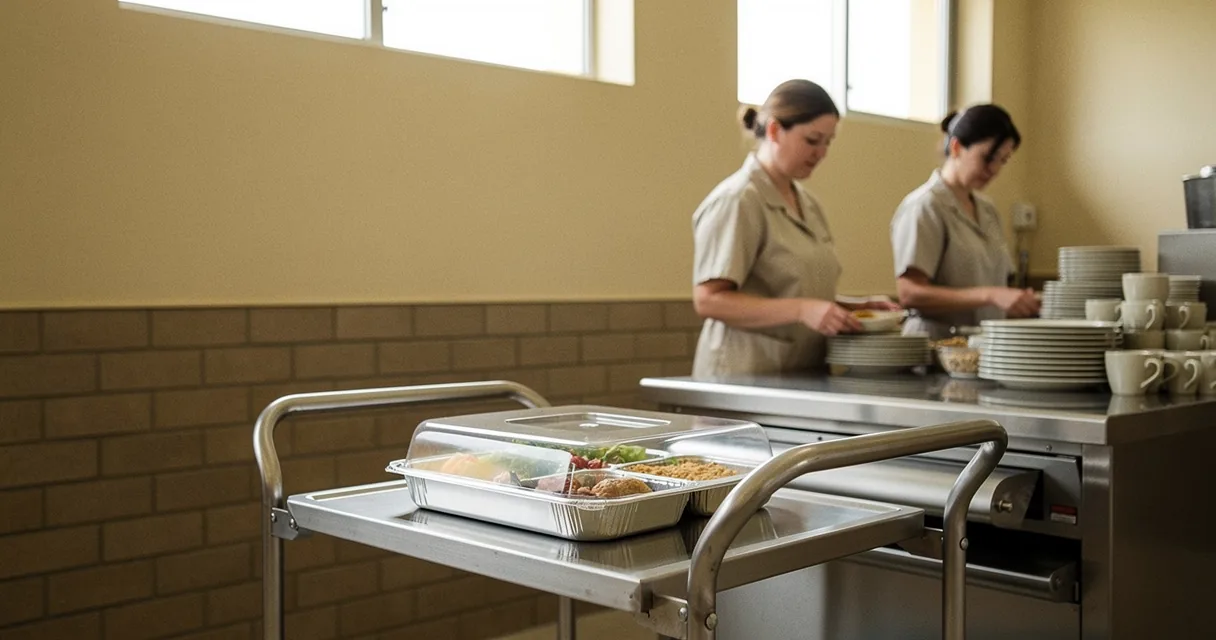
The opening image is an imagined hospital catering scene. It depicts the ordinary meal at the centre of this question, rather than an event from the trial.